Building Customer Centred Service: Why True Alignment Is the Future of Customer Experience
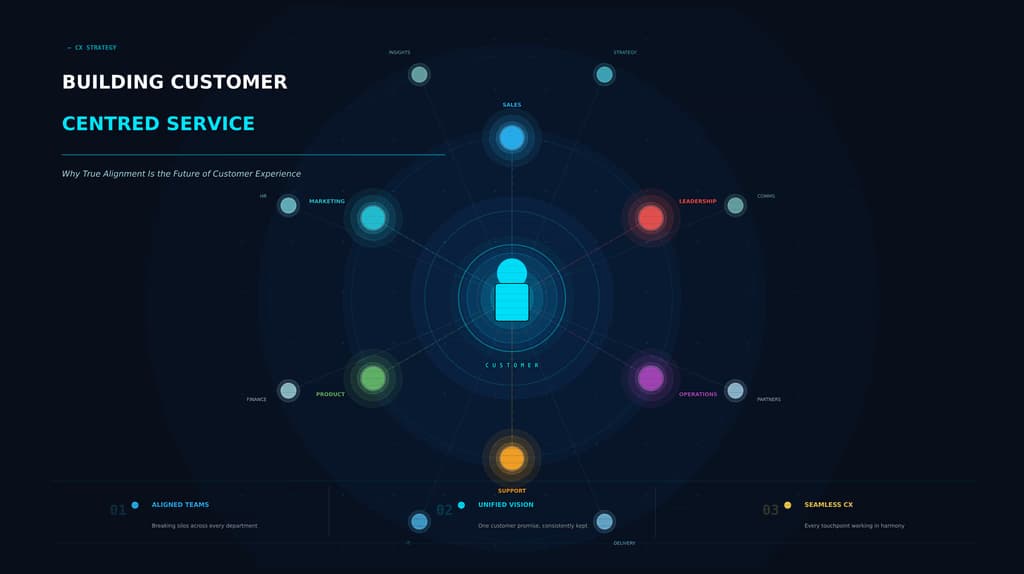
83% of B2B buyers report dissatisfaction with at least one part of their customer journey. The root cause is almost always misalignment — between people, processes, and technology.
In today's experience-driven market, customer expectations are more complex, more digital, and more independent than ever. Customers want faster answers, seamless interactions, and service teams that understand their needs long before they have to ask.
But while most organisations recognise the importance of customer-centricity, many still struggle to align their people, processes, and technology in a way that genuinely transforms the customer journey.
Why Customer Alignment Matters
Industry insights reveal that 83% of B2B buyers report dissatisfaction with at least one part of their customer journey. This dissatisfaction often stems from a single issue: misalignment.
Forgotten teams, disconnected systems, and fragmented experiences create friction long before a customer reaches a human adviser. Repeating information, navigating multiple channels, or waiting for internal handovers quickly erodes trust. The message is clear: alignment is no longer optional — it's the foundation of modern customer service.
1. What Alignment Looks Like in a Customer-First Environment
Today's customers expect every interaction to feel connected, regardless of the channel they choose. As customer journeys become increasingly self-directed, organisations must ensure that automation, digital tools, and human teams work together — not in isolation.
2. Turning Data into Understanding
Customers expect information quickly, accurately, and consistently. When their data is spread across systems or departments, the experience becomes slow and inconsistent. Consolidating information into a unified view allows service teams to respond faster, anticipate needs, and personalise interactions with confidence.
3. Building a Culture of Customer Obsession
Customer-centric organisations invest in their people as much as they do in their technology. When service teams are trained, supported, and given the full context behind customer interactions, they deliver service that is not just faster, but more human, empathetic, and effective.
4. Connecting Technology for Seamless Service
The goal isn't to add more tools — it's to connect the right ones. When systems align, teams align. When teams align, the customer feels it instantly.
What Modern Customers Truly Want
- Fast access to accurate information
- A seamless experience across every touchpoint
- Predictive, preventative service — not just reactive fixes
- Human-centric support backed by smart digital tools
In other words, they want service that feels effortless.
Creating Superior Experiences
Customer expectations will continue to rise, channels will continue to evolve, and the organisations that succeed will be those that design service around clarity, connection, and alignment. That's where true differentiation begins.
Ready to talk?
Let's build something great together.
Our team is ready to show you what world-class CX looks like in practice.
Get in Touch